Commercial Security Fencing in Springfield, MO: How to Choose the Right System for Your Property
The right commercial security fence depends on more than the material. Before choosing chain link, ornamental fencing, privacy fencing, or a gate system, you need to consider what the property is protecting, where people and vehicles need access, whether visibility or screening matters, and how the site is used every day.
That is especially important for commercial properties because the fence has to do two jobs at once: help secure the property and allow the business to operate efficiently.
Gooseberry Creek Fencing brings more than 15 years of combined industry experience to commercial fencing projects throughout Springfield and Southwest Missouri. As a veteran-owned, licensed, insured, and bonded company, the team focuses on durable work, honest communication, and helping property owners choose fencing that fits the actual site rather than using the same solution everywhere.
This guide walks through the decisions that matter most when planning a commercial security fencing system.
What Does a Commercial Security Fence Actually Need to Do?
A commercial security fence should establish a clear perimeter, discourage unwanted access, protect important areas, and guide legitimate traffic toward the correct entrances.
What that looks like depends on the property.
A public-facing business may need a professional-looking boundary that still feels open and welcoming. An equipment yard may care more about controlling access and maintaining visibility across a large perimeter. A property with outdoor inventory, fleet vehicles, or restricted work areas may need separate secured zones.
Before discussing materials, start with three questions:
- What needs to be protected?
- Who needs regular access?
- Where should that access occur?
Those answers shape almost every decision that follows.
A commercial fence works best when the perimeter, gates, and traffic flow are planned as one system.
Start With the Property, Not the Fence Material
The best commercial fence is determined by the way the property operates, not simply by which material looks strongest.
One mistake we often see is choosing a fence first and trying to make the property's access needs fit around it later. Planning works better in the opposite order.
Identify What Needs Protection
Start by defining the actual security goal.
You may need to protect:
- An entire property perimeter
- Equipment or machinery
- Fleet vehicles
- Outdoor inventory
- Employee-only areas
- Loading and service areas
- A smaller restricted section within a larger site
A commercial property in Springfield with frequent customers and deliveries may need a very different configuration from a larger equipment or storage property near Buffalo or Bolivar.
The fence should match the job it needs to do.
Look for Vulnerable Areas
Walk the property and pay attention to sections that are easy to overlook.
Rear entrances, less-visible property lines, alleys, open lots, service areas, and boundaries next to neighboring properties can all affect the design.
The goal is not simply to put the strongest fence everywhere. It is to understand where access is most likely to occur and where additional control may actually be useful.
Map Everyday Traffic
A secure property still has to function.
Think about:
- Employees arriving and leaving
- Customer traffic
- Delivery trucks
- Trailers
- Service vehicles
- Equipment movement
- Pedestrian access
- Emergency access
A gate that is too narrow, poorly positioned, or difficult for trucks to approach can become a daily problem even when the fence itself is built correctly.
How Much Security Does Your Commercial Property Need?
The right level of commercial fencing depends on what is being protected, how exposed the property is, and how much access needs to occur during a normal day.
Basic Perimeter Control
Some properties mainly need a clear boundary.
In these situations, fencing can help separate public and private space, discourage casual entry, and direct visitors toward designated entrances.
Properties With Equipment or Restricted Areas
Businesses protecting vehicles, equipment, stored materials, or employee-only areas may need more deliberate access planning.
That could mean fewer entrances, carefully placed gates, greater attention to visibility, or a fence configuration designed around specific secured areas.
Properties With More Complex Security Needs
Facilities with higher security concerns may require a more customized perimeter and access strategy.
The appropriate fence height, material, openings, gates, and other features should be determined by the site's actual requirements and any applicable regulations. There is no single specification that is right for every commercial property.
Which Type of Commercial Security Fencing Is Best?
There is no universal best material.
For many commercial properties, the decision comes down to how much visibility, privacy, durability, and appearance matter in each part of the site.
| Fence Type | Often Best For | Visibility | Privacy |
|---|---|---|---|
| Chain Link | Equipment areas, storage yards, long perimeters | High | Low |
| Ornamental | Entrances and public-facing areas | High | Low |
| Privacy Fencing | Service areas and visual screening | Low | High |
| Combined System | Properties with different security needs | Varies | Varies |
Chain Link Fencing: Practical Perimeter Security
Commercial chain link fencing is one of the most practical options for commercial lots, equipment areas, storage facilities, schools, and larger properties.
It creates a physical boundary without completely blocking visibility across the site. Gooseberry Creek's commercial fencing services include chain link systems for properties that need durable perimeter definition and access control over larger areas.
For businesses with long fence runs or areas that need to remain visible, chain link is often worth considering.
Ornamental Fencing: Security With a More Finished Appearance
Commercial ornamental fencing can be a better fit where appearance matters along with perimeter control.
It is commonly considered for office properties, commercial entrances, developments, hospitality properties, and other customer-facing areas where an industrial-looking fence may not fit the property.
Gooseberry Creek offers commercial ornamental options designed to combine structure, appearance, and security.
Privacy Fencing: When Screening Matters
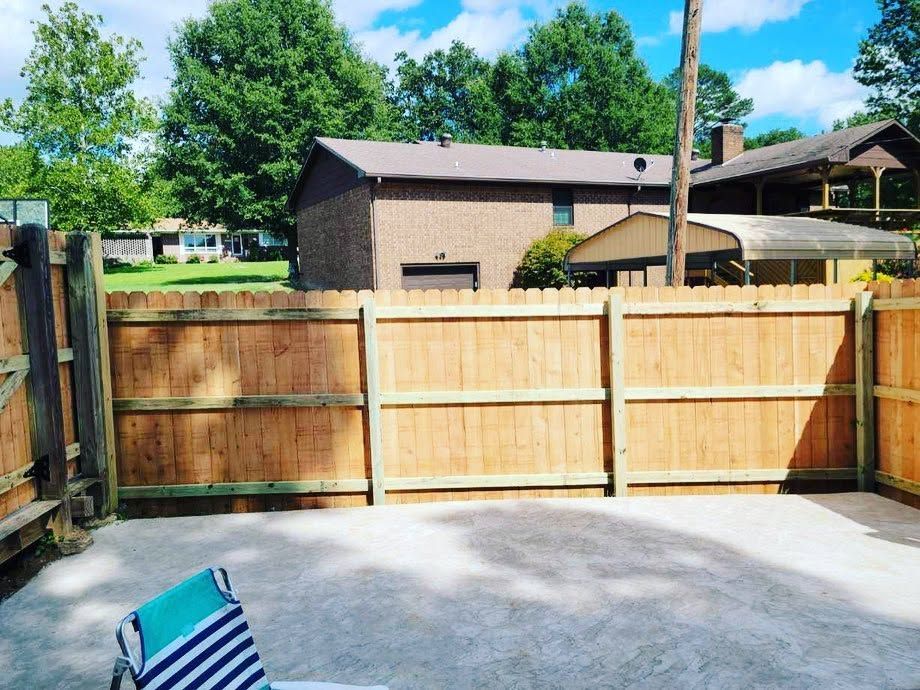
Privacy fencing can be useful around equipment, dumpsters, storage areas, service spaces, or other sections of a commercial property that should be screened from public view.
More privacy does not automatically mean more security, though.
If employees need clear sightlines across the property, or if visibility is useful for monitoring activity, a completely solid fence may not be the best solution for every section.
Can You Use More Than One Type of Fence?
Yes.
In many cases, combining materials creates a more practical result.
A business could use ornamental fencing near the main entrance, chain link around an equipment area, and privacy fencing around service or storage spaces.
That allows each part of the property to solve its own problem instead of expecting one fence material to do everything.
Is Visibility or Privacy Better for Commercial Security?
Neither is automatically better.
Visibility is useful when clear sightlines help employees monitor the property or when property owners want to avoid concealed areas.
Privacy is useful when equipment, materials, dumpsters, or work areas need to be screened.
For many commercial sites, the answer is a combination.
A public-facing boundary may remain open and visible while a rear service area receives more screening. The right balance depends on what happens in each part of the property.
Why Gates Can Be the Most Important Part of the System
The fence establishes the perimeter. The gate controls how people and vehicles move through it.
Gooseberry Creek installs commercial security gates and access-control fencing as part of its commercial fencing services.
Gate planning should happen at the same time as fence planning.
Plan Vehicle Access Around the Largest Regular Vehicle
Do not size an entrance only around passenger vehicles if delivery trucks, trailers, maintenance vehicles, or equipment also need to use it.
Consider:
- Required opening space
- Turning room
- The approach to the gate
- Where vehicles can wait
- Where they need to go after entering
A property serving frequent deliveries in Springfield may have different access challenges from a larger site near Lebanon or the Lake of the Ozarks, but the planning principle is the same: design around real traffic.
Give Pedestrian Access Its Own Consideration
Employees and visitors may not need to use the same entrance as vehicles.
Where the layout allows it, intentionally planning pedestrian gates can make everyday movement more organized and keep foot traffic from relying on large vehicle entrances.
Think Beyond the Gate Opening
One recommendation we frequently make is to look at the space on both sides of the entrance.
A gate can technically be wide enough and still be difficult to use if a truck cannot approach it properly, make the turn, or wait safely before entering.
Those details matter more in daily operation than they may appear to on a drawing.
How Does Site Layout Affect Commercial Fence Design in Southwest Missouri?
The physical property can change the fencing plan.
Uneven ground, long fence runs, parking areas, loading zones, buildings, driveways, and existing traffic patterns can all affect where a fence and gate should go.
Properties throughout Southwest Missouri also vary considerably in size. A more compact site in Republic or Willard may require careful planning around neighboring properties and road access, while larger properties outside the main commercial areas may have longer perimeters and more equipment movement.
Before installation, property owners should also confirm boundaries, easements, underground utilities, and project-specific local requirements.
Our guide to Missouri fence laws, property lines, and easements covers several of those planning considerations.
For underground utility location before digging, Missouri 811 provides the state's utility notification and marking process.
What Makes a Commercial Fence Last?
Long-term performance depends on the entire installation, not only the fence material.
The material should make sense for the property, exposure, maintenance expectations, and level of use. Posts and foundations need to properly support the fence, and gates should be planned for how frequently they will open and close.
Missouri weather adds another consideration. Commercial fencing throughout Springfield, Bolivar, Buffalo, and surrounding communities is exposed to changing temperatures, moisture, storms, and seasonal ground conditions.
Proper installation matters because even a good material can perform poorly when the system is not suited to the site.
Gooseberry Creek's commercial services emphasize durable systems and long-term performance, backed by more than 15 years of combined experience as a licensed, insured, bonded, and veteran-owned contractor.
Common Mistakes to Avoid When Planning Commercial Security Fencing
Choosing a Material Before Defining the Goal
Start with what needs protection and how the property operates. The material comes after that.
Treating the Gate as a Separate Decision
Gate size and location affect the entire perimeter. Plan them together.
Forgetting About Deliveries and Large Vehicles
A gate that works for employee cars may not work for trailers, service trucks, or equipment.
Assuming Complete Privacy Is Always Better
Sometimes visibility is an important part of managing a commercial property.
Focusing Only on the Initial Price
Consider maintenance, durability, site conditions, access needs, and how the fence will be used over time.
Skipping Pre-Installation Planning
Confirm property boundaries, utility locations, access requirements, and applicable local requirements before work begins.
How Do You Choose the Right Commercial Security Fencing System?
A practical way to make the decision is to work through the property in this order:
- Define what needs protection.
- Identify the most vulnerable areas.
- Map normal vehicle and pedestrian traffic.
- Determine where controlled access is actually needed.
- Decide where visibility or privacy matters most.
- Compare the fence materials suited to those needs.
- Plan gates as part of the original layout.
- Have an experienced commercial fencing contractor evaluate the site.
The best system is not automatically the tallest fence or the most complicated entrance.
It is the combination of perimeter fencing, materials, and access points that protects the property without creating unnecessary problems for the people who use it every day.
Frequently Asked Questions About Commercial Security Fencing
What is the best type of fence for commercial property security?
The best fence depends on the property. Chain link is often practical for visibility and larger perimeters, ornamental fencing can provide security with a more finished appearance, and privacy fencing can screen selected areas.
Is chain link fencing good for commercial security?
Yes. Chain link is commonly used for commercial properties because it creates a durable boundary while maintaining visibility. The appropriate configuration depends on the site's use and security needs.
Is visibility or privacy better for a commercial fence?
It depends on the purpose of the area. Visibility can help maintain clear sightlines, while privacy can screen equipment, materials, and service spaces. Many properties benefit from using both in different areas.
Can gates be included with commercial security fencing?
Yes. Commercial fence systems can include vehicle gates, pedestrian gates, security gates, and other access solutions based on the site's layout and how the property is used.
What should I consider before installing commercial fencing?
Start with security goals, property boundaries, vulnerable areas, traffic flow, gate requirements, visibility, utilities, terrain, and applicable local requirements. Addressing those factors before choosing the final fence usually leads to a better-functioning system.